Reviewed · HALF-DAY
Madeira: Half-Day Bouldering Adventure with Snacks
Rock moves fast in Madeira. I love the crash-pad safety and the guide-led basics that help you try real problems quickly, but the approach can be technical and you need proper shoes.
You’ll get a true outdoor mix, from green valleys to rocky cliffs and potential seaside climbing. With small groups of up to 4, you also get hands-on spotting and a follow-up of photos and video, though swimming depends on calm water.
In This Review
- Key things you’ll notice right away
- Madeira Bouldering in a Half-Day: what you do in 3 hours
- Meeting at Pinto’s Clock Café: start where locals pass by
- The gear and warm-up routine that makes climbing easier
- Learning bouldering basics on real Madeira rock
- Crash pads, chalk, tape, and spotting: safe, but still fun
- Where you’ll climb: valleys, cliffs, and seaside rock
- Breaks, snacks, and the optional swim if the sea cooperates
- Price and value: what $104 buys you on Madeira
- Who this is best for (and who should skip it)
- Should you book this Madeira bouldering adventure?
- FAQ
- How long is the Madeira half-day bouldering adventure?
- What is included in the tour price?
- Do I need to bring climbing shoes?
- Is pickup and drop-off included?
- What should I bring for the climb and approach?
- Is swimming included at the end?
Key things you’ll notice right away
- Small group, real attention: up to 4 participants, so the guide can watch your feet, hands, and body position.
- Safety gear that feels normal: crash pads, chalk, and tape, plus spotting throughout.
- Instruction for how to move: you get the basics of bouldering, including how to use crash pads and how to spot.
- Outdoor variety in 3 hours: valleys, cliffs, and potentially beachside climbs.
- A warm-up tool you might not expect: a portable fingerboard to get your hands ready.
Madeira Bouldering in a Half-Day: what you do in 3 hours
This is a compact climbing block, not a long hiking day. In about 3 hours, you’ll go from a quick safety and technique briefing to multiple bouldering tries, with breaks built in so you can actually enjoy the views between climbs.
What I like about this format is that it helps you learn by doing. You’re not just watching, and you’re not stuck on one route for the whole session. The guide keeps you moving through different problems that fit your level, so you can feel progress without feeling rushed.
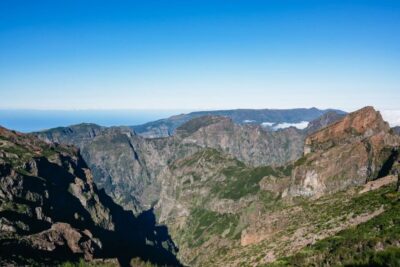
The other big payoff is how Madeira’s geology turns into a climbing playground. You’ll climb volcanic rock with dramatic ocean backdrops, so every time you step off the pad, you get a fresh view to reset your brain.
Meeting at Pinto’s Clock Café: start where locals pass by
Your meeting point is a parking lot just before Pinto’s Clock Café. This matters because it sets the tone for the day. You’re starting from a real, practical base, not a remote meeting in the middle of nowhere.
From there, you’ll get a short briefing. Expect the basics first: how to move on the rock, how to spot (where to stand, how to call out your plan, how to help your partner safely), and how crash pads work in the real world, not just in climbing videos.
I’d treat this like a warm-up to your mindset. Even if you’ve climbed before, bouldering is about control, not speed. The briefing helps you slow down and read the rock, then commit.
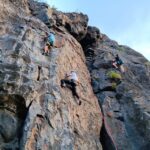
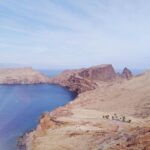
Volcanic rock face routes for every level
The gear and warm-up routine that makes climbing easier
Climbing shoes are not included, but rental climbing shoes are available for a small fee. If you already own shoes, bring them. If you don’t, renting is usually the simpler choice since fit and sizing matter for comfort and performance.
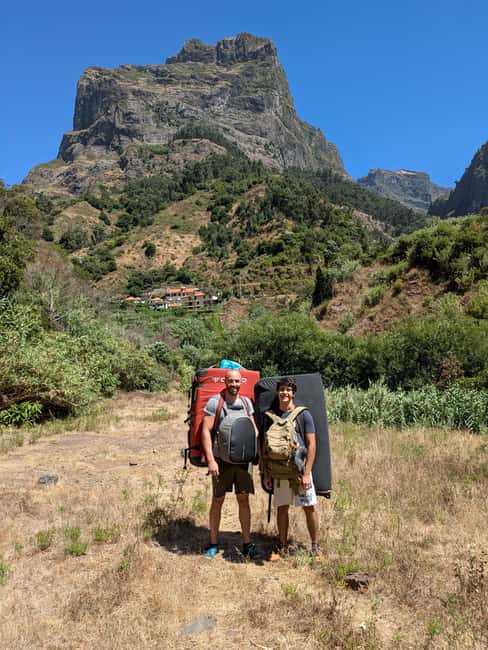
For the approach, you should plan to walk on technical terrain. Bring approach shoes or sports shoes and make sure they grip. The activity specifically asks you to avoid flip-flops and Crocs, and that’s good advice. The goal is traction and ankle stability, so you spend energy on climbing, not on balancing.
Before your first attempts, the guide provides a portable fingerboard for warming up. That’s a smart addition because it takes the edge off cold hands and lets you get ready for holds without immediately jumping into harder problems.
Also, bring what the day will demand:
- water (you’ll want it during breaks)
- sunscreen (Madeira sun can be strong)
- comfortable clothes you can move in
You’ll get snacks during the session, which is a small thing that still helps a lot. When you’re working boulders, your body burns more than you expect.
Learning bouldering basics on real Madeira rock
Even if you’re new to bouldering, this tour is set up to teach you without turning it into a lecture. You start with instruction on:
- how to move on the rock
- how to spot safely
- how to use crash pads for landings
This is not just safety talk. It affects your climbing directly. If you understand where you should land and how to manage your body position, you take more confident attempts. And if you learn how to spot well, the guide and your partner can help you commit instead of hovering awkwardly.
You’ll also get help choosing climbs that match your level. The format supports easier and harder options depending on what you want that day. So if you’re a beginner, you can build confidence. If you have experience indoors, you can translate that muscle memory to outdoor holds and friction.
One useful detail from a participant who climbed with Steve in January 2026: he selects problems that suit your level, and he even works on searching for new boulders and grading them. That kind of local, problem-minded coaching often makes the session feel more tailored than a generic tourist demo.
Crash pads, chalk, tape, and spotting: safe, but still fun
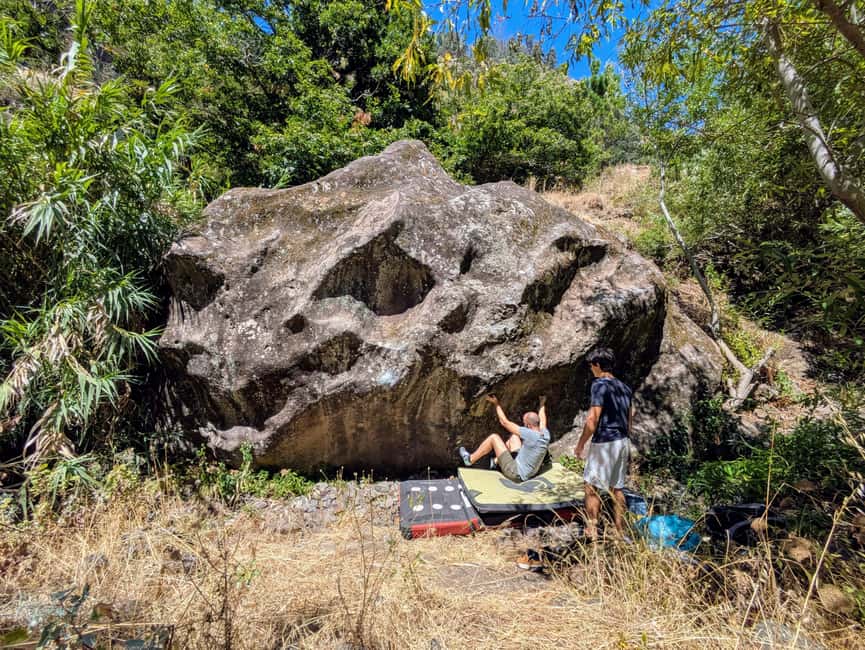
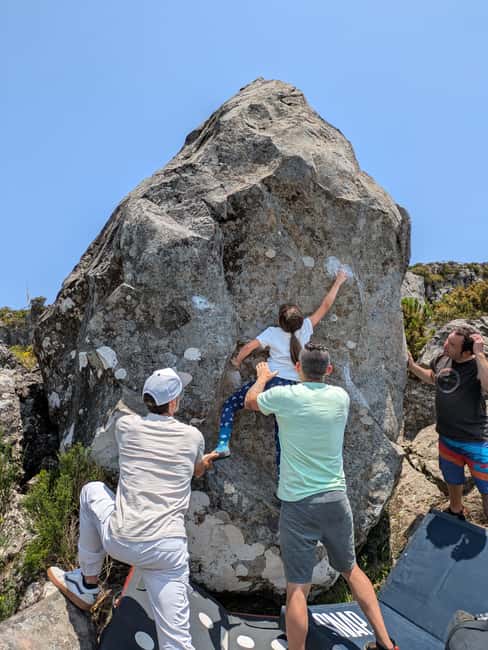
This activity takes safety seriously without making it stiff. Crash pads are provided, and you’ll use plenty of them for safer landings. You also get chalk and tape, which are the practical tools that help you stick to the rock.
Spotting support is part of the session throughout, not only at the start. You’ll likely be shown where to stand, when to call out, and how to watch for where a fall would go. In bouldering, spotting is more than being present. It helps protect the person climbing and also helps your whole group feel calm enough to try.
Chalk and tape are also a quality-of-life upgrade. You don’t have to plan around bringing supplies, and the guide can use them as part of adjusting your attempt strategy. It’s a small detail, but it reduces friction, and you climb more.
Where you’ll climb: valleys, cliffs, and seaside rock
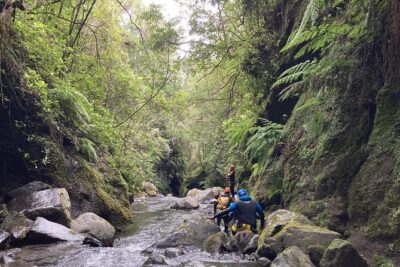
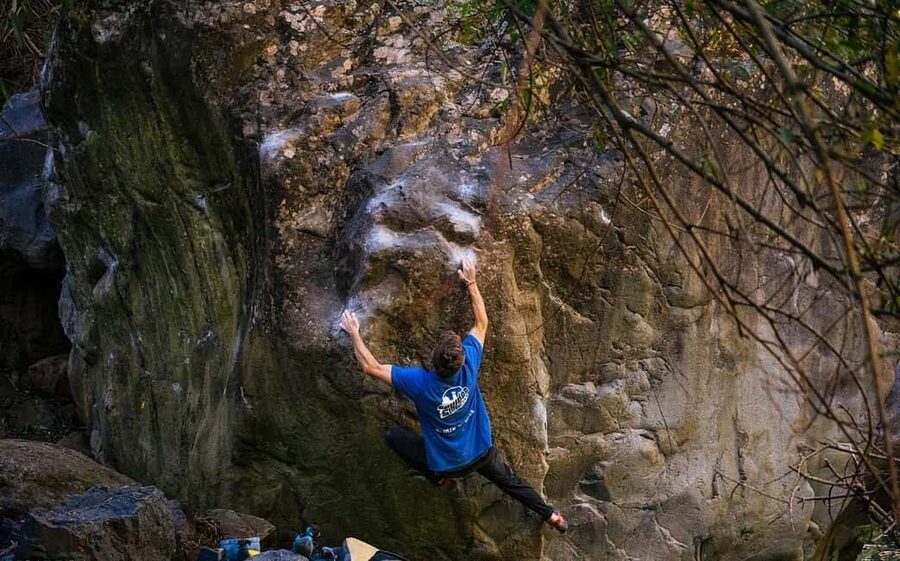
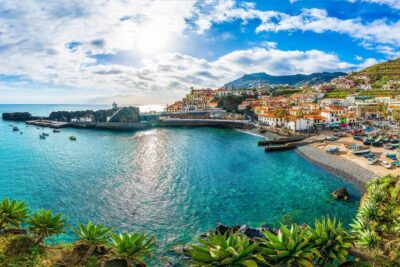
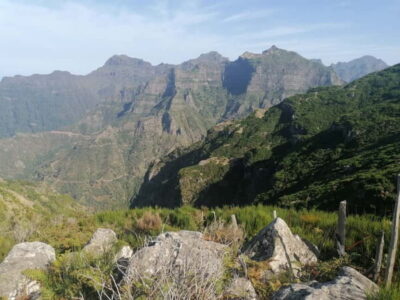
Madeira’s bouldering can feel like you’re hopping through different micro worlds. This half-day experience is built around that idea. You’ll climb in spots that range from green valleys to rocky cliffs and, if conditions allow, seaside locations.
The exact spots can vary, but here’s what you can rely on:
- you’ll see ocean views while climbing
- you’ll climb on volcanic rock formations
- you’ll take breaks in scenic areas between attempts
A real highlight is the seaside option. One climber shared that they spent the day at a beach in the south of the island, which made the setting feel dramatic and fresh. If you get a similar mix, the combination of ocean air and rock texture can make bouldering feel more alive than indoor gym sessions.
Keep in mind the approach can be technical. That’s not about danger so much as footing and careful steps. If you’ve only hiked on flat paths, this is your reminder to wear shoes with real grip and to walk like you’re scouting your next beta.
Also, you’ll be walking and climbing in active outdoor areas, so follow the basic rules provided: no littering, no making fire, and no alcohol or drugs during the activity.
A few more corners of the island worth seeing
- Madeira: Nuns Valley Half-Day Tour★ 4.5 · 1,955 reviews
- Madeira: Half-Day Off-Road Buggy Tour★ 4.8 · 940 reviews
- Funchal: Half-day Beginners Canyoning★ 5.0 · 214 reviews
Breaks, snacks, and the optional swim if the sea cooperates
Between climbs, you’ll rest and soak up the scenery. This is more than downtime. It helps you reset your breathing and shake out your hands. Bouldering is hard on fingers and shoulders, and short recovery breaks can change how your next attempt feels.
Snacks are included, and they’re timed well for a 3-hour session. You won’t end up hungry and distracted, which is a common problem on short adventures.
At the end, if the sea is calm, you can go for a swim. If this option matters to you, bring a towel. The tour doesn’t promise rough-water swimming. It’s conditional on conditions, so have your plan be flexible and your towel be ready.
Price and value: what $104 buys you on Madeira
At $104 per person for a 3-hour half-day, you’re paying for coaching plus gear plus photos. That’s the key to the value math.
You get:
- a local climbing guide
- crash pads, chalk, and tape
- a portable fingerboard for warm-up
- spotting support throughout
- snacks
- photos and videos taken on your guide’s phone sent after the activity
Climbing shoes are not included, but rentals are available for a small fee. Pickup and drop-off are also not included, though you can arrange it for an additional cost.
So is it worth it? For me, the value hinges on two things:
1) You’re buying instruction and safety coverage so you can climb more and worry less.
2) You’re using provided gear, which saves time and hassle on a trip where you likely have other plans.
If you’re traveling solo with limited climbing knowledge, you’ll feel that value quickly because the guide helps you pick problems and adjust your technique. If you already have a strong outdoor bouldering routine and someone to spot you, you might feel the cost more sharply, since the tour’s main job is coaching and setup.
But for most people, especially beginners and indoor climbers transitioning outdoors, this setup is a solid way to get real practice on Madeira rock without turning the day into a DIY logistics project.
Who this is best for (and who should skip it)
This is small-group bouldering with active coaching, so it fits people who want movement, technique guidance, and outdoor views without committing to a full day.
It is not suitable for:
- children under 12
- people with back problems
- people with mobility impairments
- people with heart problems
- people over 75
- people with recent surgeries
- people with low level of fitness
Those restrictions matter because bouldering includes falls, uneven footing, and the physical effort of trying multiple problems close together.
It’s also worth noting that approach walking can be technical, so if walking on uneven terrain is a challenge for you, take that seriously before booking.
Who will love it most:
- first-time boulders who want a clear safety framework
- indoor climbers who want to translate skills to outdoor volcanic rock
- travelers who like short, focused adventure blocks with scenery and a clear end time
- people who appreciate a small group, calm coaching, and gear handled for them
Should you book this Madeira bouldering adventure?
If you want a half-day that mixes real coaching, safety-focused gear, and Madeiran scenery, I think this is an easy yes. The session length is ideal when you have a tight itinerary, and the small-group size helps you get attention on how you move and where you place your hands and feet.
Book it if you:
- can handle some technical walking to the boulders
- are comfortable trying different climbs at your level
- want crash-pad bouldering with instruction, plus snacks and photos after
I’d skip it if you’re in any of the listed health or mobility categories, or if you know technical approaches and bouldering falls are not something you can manage comfortably.
If you’re on the fence, the deciding question is simple: do you want guided outdoor bouldering in Madeira with gear and spotting handled? If that sounds like your kind of day, this one is built for it.
FAQ
How long is the Madeira half-day bouldering adventure?
It lasts about 3 hours.
What is included in the tour price?
You get a local climbing guide, crash pads, chalk, tape, a portable fingerboard for warming up, snacks, safety briefing and climbing instruction, spotting support throughout, and photos or videos taken on your guide’s phone after the activity.
Do I need to bring climbing shoes?
Climbing shoes are not included, but rental climbing shoes are available for a small fee. You should plan to bring your own if you have them.
Is pickup and drop-off included?
No. Pick-up and drop-off can be arranged for an additional cost.
What should I bring for the climb and approach?
Bring hiking shoes or sports shoes for the approach, sunscreen, water, and comfortable clothes. Avoid sandals or flip-flops.
Is swimming included at the end?
A swim is offered at the end only if the sea is calm. If you want that option, bring a towel.
Latest additions across the island
- Madeira: East Coast Cabriolet Road Trip
★ 5.0 · 1 review - Tuk Tuk Botanical Garden – Madeira Island
★ 5.0 · 1 review - Funchal: Sunrise Private Sailing Trip with Breakfast
★ 5.0 · 1 review - Madeira: Levada Referta – Castelejo Guided Walk
★ 4.0 · 1 review - Garajau Coastal Hike and Cliff Jumping
★ 5.0 · 1 review - Monte Tropical Gardens and Old Town Tuk Tuk private tour
★ 5.0 · 1 review - Full-Day Tour: Santana Houses, Pico do Arieiro, Free Rum Tasting
★ 5.0 · 1 review
Half-Day, compared.
Half-Day Small-Group Madeira Village Safari from Funchal
Read our review →