
Reviewed · WORKSHOPS
Hands-On Bolo do Caco Baking Class with a Madeiran Family
Kneading bolo do caco feels like magic. This small, family-home class is all about learning Madeira’s most traditional bread the real way, with Tonia and her aunt, and guidance from her mother who has over 40 years of bread-making experience. With a maximum of 5 travelers, you get personal attention instead of a rushed production.
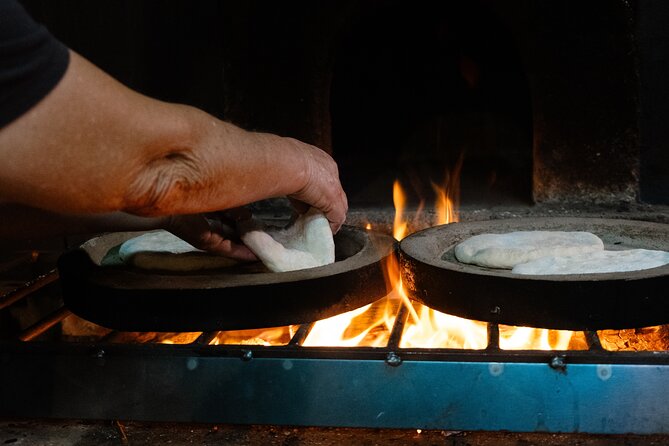
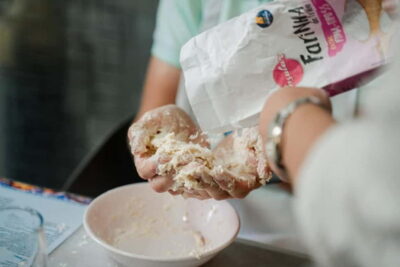
I love that you’re not stuck watching from the sidelines. You’ll learn the bread’s cultural significance, then roll up your sleeves to knead dough and shape it by hand, and you’ll see how the dough transforms when it bakes on a hot stone.
One thing to consider: this is hands-on baking in a home kitchen, so it’s not ideal if you want a sit-and-snack class. Wear comfortable clothes, and expect to get a little flour on your day.
In This Review
- Key things I’d write on your Madeira packing list
- Why Bolo do Caco deserves a spot in your Madeira trip
- Meeting at Travessa do Lombo do Alho, then straight into the kitchen
- Who guides you: Tonia, her aunt, and a mother with 40+ years of bread craft
- The hands-on lesson: kneading, shaping, and learning the bread by touch
- Baking on a hot stone: how the smell cues you that it’s working
- The table moment: garlic butter, Portuguese cheese, and chouriço
- Why the small group size improves everything
- Who this class is best for in Madeira
- Final call: should you book the Bolo do Caco class?
- FAQ
- How long is the Bolo do Caco baking class?
- Is the class offered in English?
- Where do we meet for the experience?
- Is a mobile ticket provided?
- Are kids and babies welcome?
- What should I wear since it is hands-on?
- Can I cancel for a full refund?
Key things I’d write on your Madeira packing list
- A true family setup with Tonia and her aunt: friendly, relaxed, and more like being welcomed than being processed.
- Bread expertise from the kitchen matriarch: Tonia’s mother brings more than 40 years of bread-making know-how.
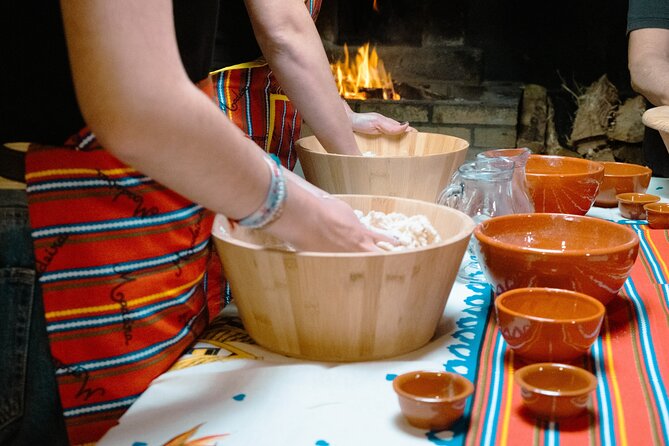
- Hand-shaping that teaches you the bread’s logic: you’ll roll, knead, and form the dough yourself.
- Hot-stone baking you can smell as it cooks: the aroma builds fast in a warm kitchen.
- A meal built around your bread: garlic butter, Portuguese cheese, and chouriço at the table.
Why Bolo do Caco deserves a spot in your Madeira trip
Madeira food is not just about what you eat. It’s also about how it’s made, who makes it, and what families pass down through years of kitchen work. Bolo do Caco is one of those breads that carries identity. It’s traditional, but it’s also practical, because it’s the kind of bread that shows up alongside everyday flavors.
In this class, you’re not just learning recipes. You’re learning meaning. You start with the history and cultural significance of Bolo do Caco, then you move into the physical steps. That combo matters. When you understand why something is done a certain way, the baking feels less random and more like a craft.
And the payoff is immediate. You get to shape dough with your own hands, watch it cook on a hot stone, then sit down while it’s still warm. That rhythm is hard to recreate on your own unless you already know where to find the right stone-baking setup and ingredients.
Meeting at Travessa do Lombo do Alho, then straight into the kitchen
The experience starts at Travessa do Lombo do Alho, 9360, Portugal. It ends back at the same meeting point, so you’re not dealing with a long shuffle across town afterward.
What I like about this structure is how efficient it feels. In about 3 hours (approx.), you get a full cycle: instruction, hands-on work, baking, and eating. That makes it a great fit when you want a meaningful Madeira experience without building your whole day around it.
Also, the max group size helps here. When you show up to a home kitchen with only a handful of people, the host can move at a human pace. You’re less likely to feel like you’re squeezing into someone else’s schedule.
Make something before you fly home


Who guides you: Tonia, her aunt, and a mother with 40+ years of bread craft
The class is hosted by Tonia’s family, with Tonia and her aunt doing the welcoming and guiding. You’ll also learn from Tonia’s mother, who has over 40 years of bread-making expertise. That kind of long practice changes everything. It’s not just teaching steps, it’s teaching instincts.
You’ll feel the difference in how the session is run. The vibe is family-first, not customer-first. The activity is in a family home, so expect warmth, laughter, and stories along the way, not a scripted lecture.
Another detail that matters: the tour is offered in English. If you don’t want to wrestle with language while kneading and baking, this is a smart choice. You can focus on what your hands are doing, and you can actually take in the explanations.
The hands-on lesson: kneading, shaping, and learning the bread by touch
This is where the class earns its keep. You don’t just get a brochure version of Bolo do Caco. You’ll learn by doing.
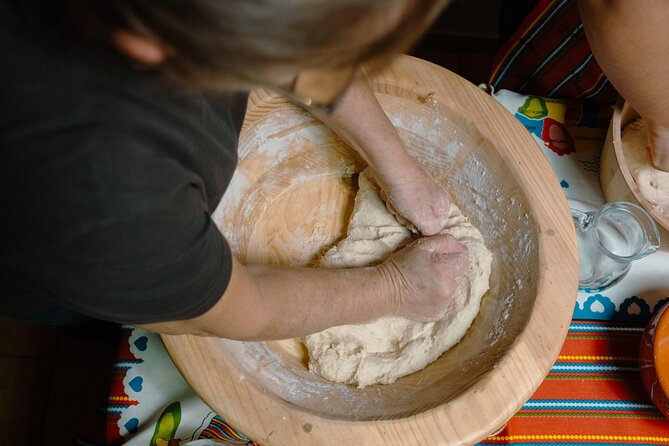
First, you’ll hear about the bread’s history and cultural significance. Then you’ll roll up your sleeves. You’ll knead the dough, and you’ll shape it by hand. That matters because Bolo do Caco is not one of those breads you can easily fake. Shape influences thickness, and thickness influences how it cooks and how it eats.
In a home setting, you’ll also get feedback as you work. With a small group of up to 5 travelers, it’s easier for the host to notice what you’re doing and help you adjust without making a big fuss.
Practical tip: wear comfortable clothes. You’re hands-on during the process, so your outfit needs to survive flour and warm kitchen air. If you have sensitive skin, consider a long-sleeve top you don’t mind getting slightly messy.
Baking on a hot stone: how the smell cues you that it’s working
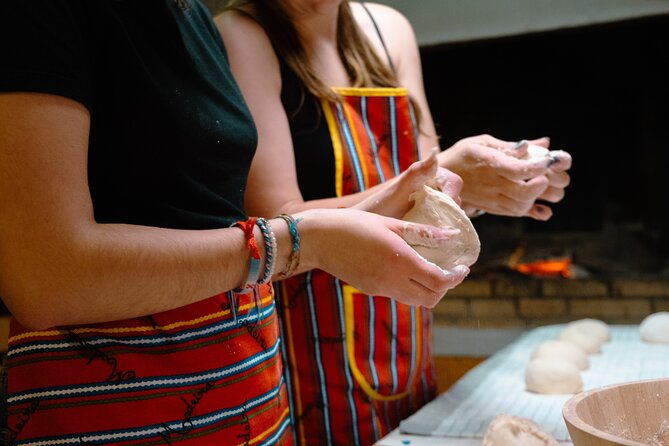
Bolo do Caco cooks on a hot stone, and that detail is more than a fun fact. Stone baking creates a specific heat experience. It helps with crust development and gives the bread that satisfying, bread-shop texture that’s hard to replicate with a basic home oven setup.
As the bread cooks, the kitchen becomes part of the lesson. The warm atmosphere, the smell of bread baking, and the shared moment of waiting all build the anticipation. This is one of those experiences where the sensory cues help you understand the process without needing a textbook.
In practical terms, you’ll spend enough time actively involved that you don’t feel like you’re waiting around. The session flows from dough work to cooking, and then straight to eating when the bread is ready.
The table moment: garlic butter, Portuguese cheese, and chouriço
Once the bread is done, you gather around the table to eat it. This is not a token tasting. It’s a proper Madeiran bread moment paired with classic flavors.
You’ll enjoy Bolo do Caco with:
- garlic butter
- Portuguese cheese
- chouriço
That pairing makes sense because the bread is built for bold, savory toppings. Garlic butter brings warmth and richness. Portuguese cheese adds salt and depth. Chouriço brings a smoky, spicy edge that turns a simple bread into a real meal.
I also like the pacing here. You bake the bread, you let it land hot in front of you, and then you eat it while the day’s work is still fresh in your mind. It makes the bread feel earned, not bought.
And because the atmosphere is family-style, you’re likely to hear more stories while you eat. That’s where a cooking class quietly turns into cultural time, not just culinary time.
Pair this with something on the other coast:
- From Funchal: Ecological Catamaran Dolphin Whale Watching★ 4.5 · 8,204 reviews
- Madeira: Skywalk, Porto Moniz, Seixal, and Fanal 4WD Tour★ 4.9 · 7,905 reviews
- Funchal: Dolphin and Whale Watching Catamaran Cruise★ 4.5 · 5,697 reviews
Why the small group size improves everything
This activity caps at 5 travelers. That small number is not just a comfort detail. It directly affects your experience.
With fewer people:
- you get more hands-on attention
- questions are easier to answer in real time
- the kitchen atmosphere stays calm enough to actually enjoy the learning
- you spend more of the session working, not waiting
It also makes the family setting easier to respect. You’re not taking over the home. You’re sharing the home.
If you like tours that feel personal, this is the type that works. If you prefer big-group entertainment, you might find this slower and more intimate than you expect, but it stays focused on bread and conversation.
Who this class is best for in Madeira
You’ll probably love this experience if you:
- enjoy food that’s tied to local tradition
- want hands-on learning, not just watching
- like small groups and friendly hosts
- want a meaningful way to understand Madeira beyond viewpoints
It’s also family-friendly. Kids and babies are welcome, and there’s space for them to play without disrupting the class. If you’re traveling with little ones, that matters. A lot of food experiences fall apart when a child needs movement.
Who might not love it as much: anyone who wants a fully passive experience. Since you’re kneading and shaping dough, this is active time in a kitchen.
Final call: should you book the Bolo do Caco class?
If you want one Madeira experience that feels authentic, personal, and practical, I’d book it. You get the story of Bolo do Caco, you learn the craft through hands-on steps, and you eat what you make with classic Madeiran companions like garlic butter, Portuguese cheese, and chouriço.
The biggest reason to choose it is simple: the host is a bread family. Tonia, her aunt, and her mother with over 40 years of bread-making experience make this less like a performance and more like kitchen time you can carry home in your memory.
If you show up with comfortable clothes, a good attitude, and an appetite for learning, this one will stick with you.
FAQ
How long is the Bolo do Caco baking class?
The class lasts about 3 hours.
Is the class offered in English?
Yes. The experience is offered in English.
Where do we meet for the experience?
You start at Travessa do Lombo do Alho, 9360, Portugal.
Is a mobile ticket provided?
Yes, it’s a mobile ticket.
Are kids and babies welcome?
Yes. Kids and babies are welcome, and there is space for them to play without disrupting the class.
What should I wear since it is hands-on?
Wear comfortable clothes, because you will be hands-on during the baking process.
Can I cancel for a full refund?
Yes. Free cancellation is available, and you can cancel up to 24 hours in advance for a full refund. If you cancel within 24 hours of the start time, the amount paid is not refunded.
Latest additions across the island
- Madeira: East Coast Cabriolet Road Trip
★ 5.0 · 1 review - Tuk Tuk Botanical Garden – Madeira Island
★ 5.0 · 1 review - Funchal: Sunrise Private Sailing Trip with Breakfast
★ 5.0 · 1 review - Madeira: Levada Referta – Castelejo Guided Walk
★ 4.0 · 1 review - Garajau Coastal Hike and Cliff Jumping
★ 5.0 · 1 review - Monte Tropical Gardens and Old Town Tuk Tuk private tour
★ 5.0 · 1 review - Full-Day Tour: Santana Houses, Pico do Arieiro, Free Rum Tasting
★ 5.0 · 1 review
Workshops, compared.




Madeira Surfing Lessons – Aroundfreedom Surf School
Read our review →

Between Sweet Traditions: pastel de nata workshop in Madeira
Read our review →
Browse the lists this tour appears in